

It started slowly. I started noticing my daughter getting more and more bold about asking for things at the store. I started responding, “are you buying it?”. She of course looked at me blankly and did not understand such an odd question. She started replying, “yes” and then I of course replied, “with what money?”. We weren’t getting anywhere productively.
This prompted conversations about earning. I started speaking with my husband about the prospect of an allowance and we both kind of brushed it off, she seemed too young and really what was it for? We bought her everything she “needed”! And aren’t allowances earned? What would my 4 year old do to earn?
Then came the constant nagging about changing clothes, brushing teeth, picking up toys, the list goes on. Then the light bulb came on! We figured out how she could earn her “allowance”. I always hated the idea of “chores”, it felt so negative and she’s so little! BUT oh boy, do I remind her that she is a part of this family and she has responsibilities too. One of my core values as a parent is to instill responsibility and I want my children to learn the value of responsibility. It was time for both of us to grow up really. I needed be her parent and teach her how.
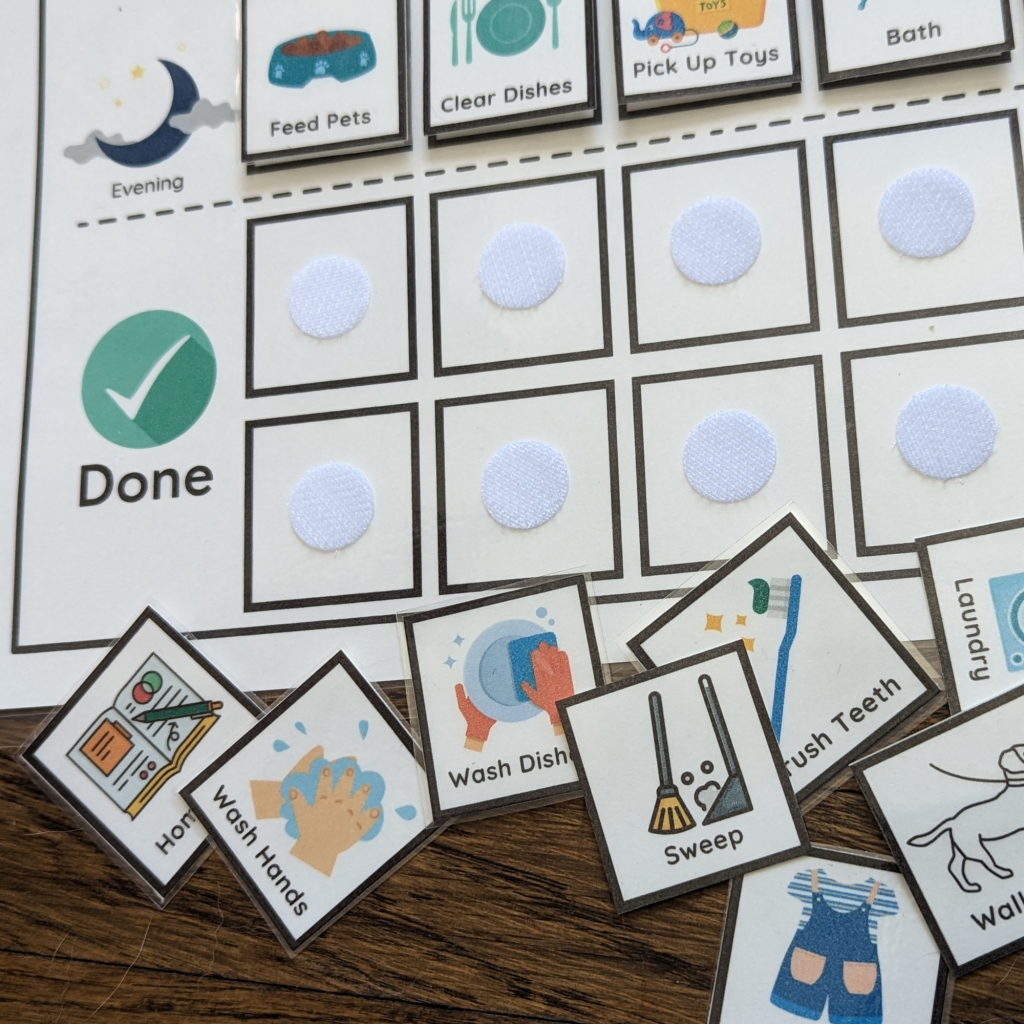
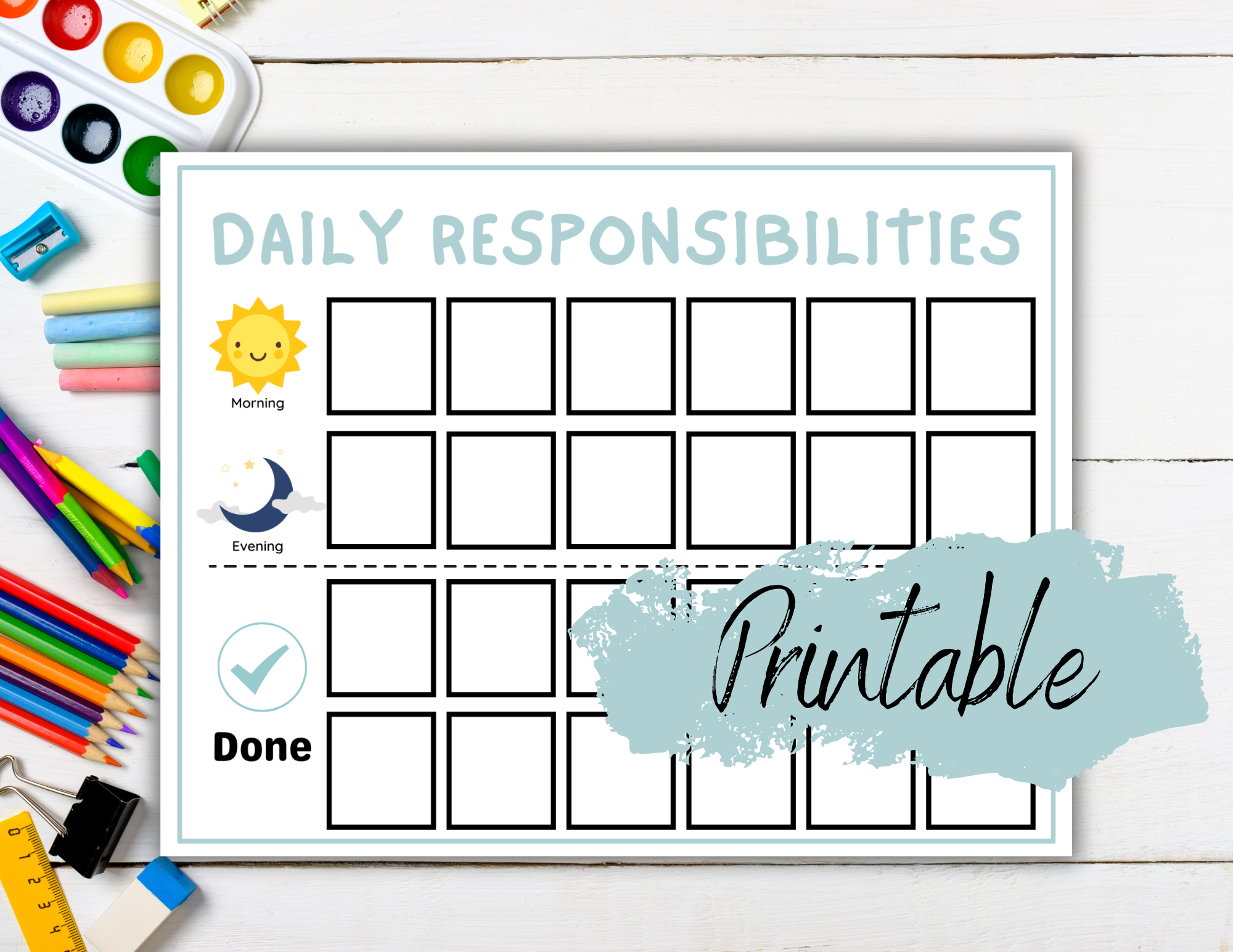
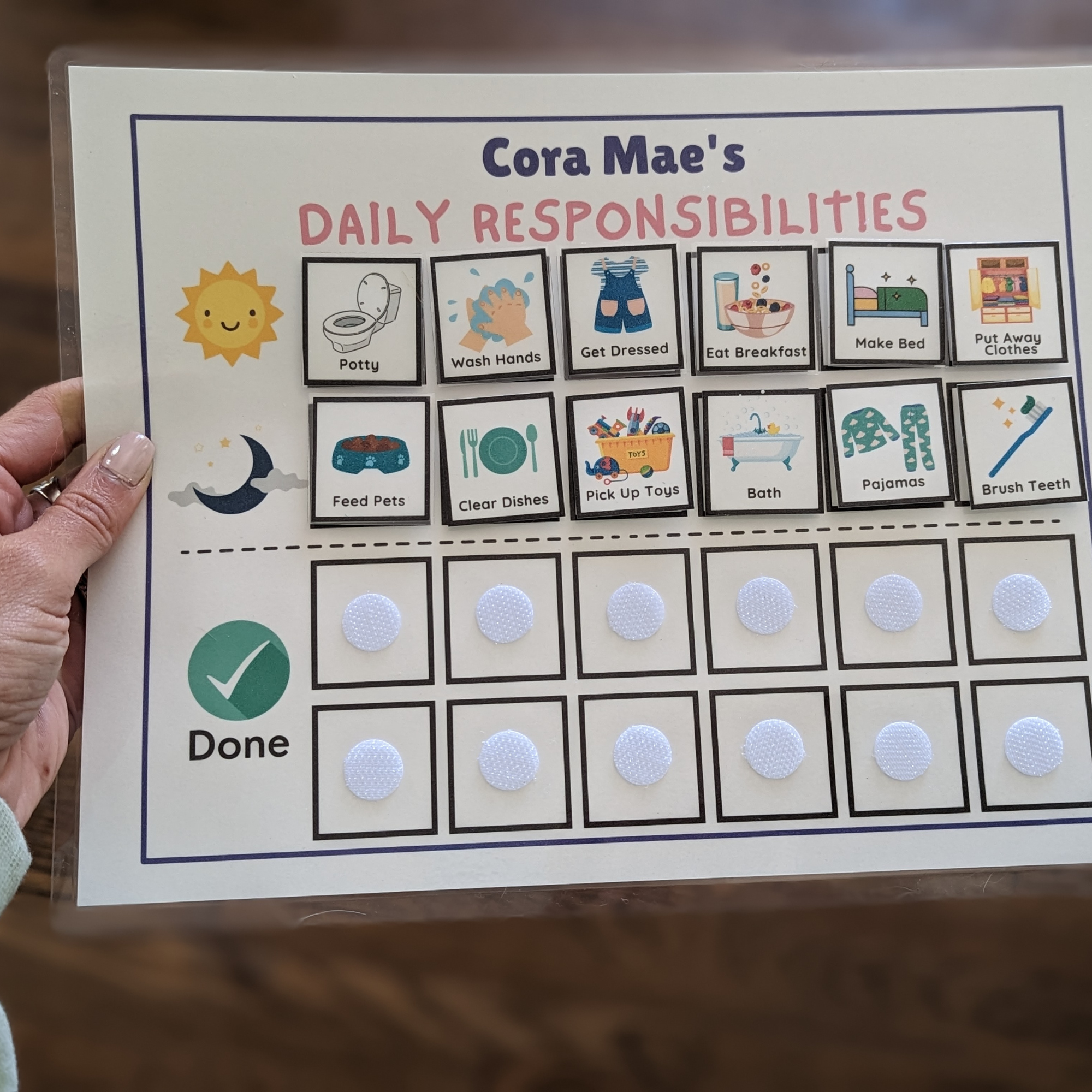
Parenting is challenging but can be so rewarding, and one of our key responsibilities is teaching our children valuable life skills so they can navigate adulthood. One effective way to cultivate a sense of responsibility and independence in kids is through the use of a chart system.

I have found that kids are very visual and tactile. Responsibility charts not only help children learn essential tasks but also promote organization, time management, and a sense of accomplishment. By being involved in moving the icons they are moving towards being self driven (and moving towards needing less reminders… um, meaning less nagging by me? Win!)
How does this chart help?
Establish a Routine: Responsibility charts provide a structured routine for children, helping them understand expectations and develop a sense of discipline. When responsibilities are assigned consistently, children learn to manage their time effectively and prioritize. A well used chart creates a sense of order and stability, reducing parental stress and fostering a harmonious household environment. Kids thrive on routines as it lessens anxiety about what is coming. They have actually started reminding me that they have things to do! Imagine my shock (and pride) the other night when I said to my daughter, let’s just lay down it’s late (I was NOT up for anything that day…not even teeth brushing…eek, I know!) and she replied, “wait! Mom, I have to finish my responsibility chart, let’s go brush our teeth and take our vitamins”. She was absolutely right.

Developing Responsibility: Along with routine, naturally comes the responsibility. Assigning age-appropriate items on the chart gives children a sense of ownership and responsibility (just like my daughter that one night…she knew her responsibility!). By completing tasks, they learn the importance of contributing to the family’s well-being and develop a work ethic that will benefit them throughout life (And less frustration for you too!). As children see their contributions acknowledged and they gain a sense of pride and accomplishment. I use a sticker chart to accompany the chart to give my kids something to work towards. (We work towards our pay checks right?). They LOVE their sticker chart!

Building Independence: Responsibility charts encourage children to take initiative and work independently. When kids are responsible for completing specific tasks on their own, they learn problem-solving skills, time management, and self-motivation. As they become proficient in their assigned jobs, they gain confidence and become more self-reliant (woo hoo!).
Fostering Accountability: Responsibility charts provide a visual representation of each child’s participation in the household, making it easier to track their progress. Regularly reviewing and discussing the chart with your children promotes accountability and allows for constructive feedback. Encourage open communication about challenges and successes, helping children develop problem-solving skills and a sense of responsibility towards their commitments.


Tips for Creating and Implementing Responsibility Charts:
- Involve your children in the process of creating the chart, allowing them to have a say in the tasks assigned. Ask them what they think needs to be done each morning to prepare for the day and evening to prepare for bedtime. They are familiar with what is normal and will likely know what is expected.
- Consider age-appropriate jobs/ responsibilities and gradually increase the difficulty as children grow older and more capable. For example, my 5 year old is responsible for clearing her dishes after dinner but my 2 year old is not yet (mainly because one can reach and the other cannot yet). So instead, my 2 year old sets the napkins on the table before dinner.
- Make the chore chart visible and easily accessible to ensure everyone in the family can refer to it.
- Offer rewards or incentives to motivate children, but emphasize the importance of intrinsic motivation and the satisfaction of a job well done.
- Be flexible and willing to adjust the chart as needed. Children’s schedules and abilities may change over time, requiring adaptations.
Introducing responsibility charts into your household routine can be a game-changer, helping your kids develop essential life skills, responsibility, and independence. By establishing a routine, fostering accountability, and teaching valuable skills, you are creating a positive and empowering environment for both yourself and your children. And hopefully, those repeated “reminders” will become a thing of the past, or at least less frequent! They say, if you do something 20 days in a row, it becomes a habit!


 ribbonsandscraps.blog
Leave a comment